
 |
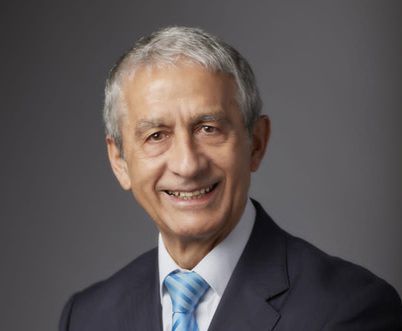
Jose Rodriguez, IEEE Life Fellow Universidad San Sebastian, CHILE jose.rodriguezp@uss.cl (Online Presentation) |
Title - Model Predictive Control: Basic Concepts, Applications, Advances, and Challenges
Abstract- Model Predictive Control (MPC) emerged years ago as an attractive control strategy for power electronics systems. Main advantages of MPC are the simple concept, the capability to include easily different control objectives and the high dynamic performance. On the contrary, like any new strategy, it also has disadvantages such as dependence on the mathematical model, dependence on the parameters and a variable frequency spectrum. However, thanks to the work carried out by the scientific community, most of these disadvantages has been resolved. This talk aims to introduce the audience to MPC and show them its evolution and applications. Special attention will be given to use of MPC in multilevel inverters using few calculations and how to avoid the use of weighting factors. The presentation will also present the evaluation to be used in electric vehicles. Finally, this talk will discuss the challenges that MPC must overcome to be adopted by the industry.
About the speaker:
Jose Rodriguez (M'81-SM'94-F'10-LF'20) received the Engineer degree in electrical engineering from the Universidad Tecnica Federico Santa Maria, in Valparaiso, Chile and the Dr.-Ing. degree in electrical engineering from the University of Erlangen, Erlangen, Germany. He has been professor sand President of Universidad Tecnica Federico Santa Maria, Universidad Andres Bello and Universidad San Sebastian, all in Chile. Now, he is Director of the Center for Energy Transition at the University of San Sebastian in Santiago de Chile. He has coauthored two books, several book chapters and more than 1000 journal and conference papers. His main research interests include multilevel inverters, new converter topologies, control of power converters, and adjustable-speed drives. He has received a number of best paper awards from journals of the IEEE. Dr. Rodriguez is member of the Chilean Academy of Engineering. In 2014 he received the National Award of Applied Sciences and Technology from the government of Chile. In 2015 he received the Eugene Mittelmann Award from the Industrial Electronics Society of the IEEE. In years 2014 to 2024 he has been included in the list of Highly Cited Researchers published by Web of Science.
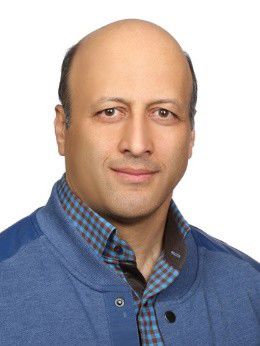 |
Hosein Farzanehfard, IEEE Senior Member Isfahan University of Technology, Isfahan, Iran (Online Presentation) |
Title - Soft Switching Techniques: From Classical Approaches to Emerging Topologies in High-Efficiency Power Conversion
Hosein Farzanehfard (Senior Member, IEEE) was born in Isfahan, Iran, in 1961. He received his B.Sc. and M.Sc. degrees in Electrical Engineering from the University of Missouri, Columbia, USA, in 1983 and 1985, respectively, and earned his Ph.D. from Virginia Polytechnic Institute and State University, Blacksburg, USA, in 1992.
Since 1993, he has been with the Department of Electrical and Computer Engineering at Isfahan University of Technology, where he currently serves as a Full Professor. Prof. Farzanehfard is the author or co-author of over 300 technical papers published in leading journals and conference proceedings. His contributions have been widely recognized through numerous awards for both academic excellence and industry-oriented research.
Prof. Farzanehfard’s research interests span a wide range of power electronics, including high-frequency soft-switching converters, high step-up and step-down converters, power factor correction, multi-input and bidirectional converters, renewable energy conversion systems, resonant converters, battery chargers, gate drivers, and LED drivers.
With decades of experience bridging cutting-edge research and practical innovation, Prof. Farzanehfard brings deep insight and inspiration to the field of power electronics.
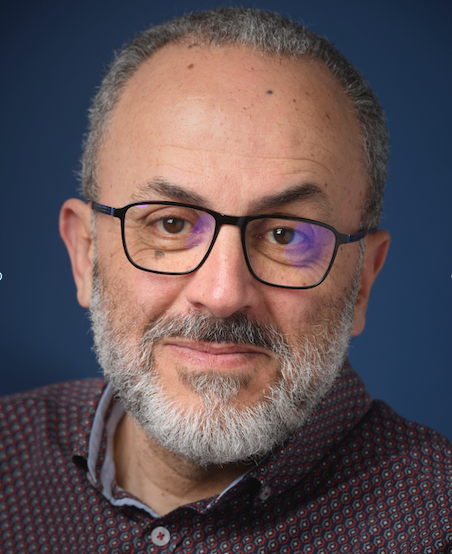 |
Mohamed Benbouzid, IEEE Fellow University of Brest, Institut de Recherche Dupuy de Lôme, Brest, France Mohamed.Benbouzid@univ-brest.fr (Online Presentation) |
Title—Exploring Energy Management in Microgrids: Approaches, Challenges, and Emerging Opportunities
Abstract—Renewable energy sources are increasingly being deployed at a large scale to meet rising energy demands, reduce environmental pollution, and support sustainable socio-economic development. The integration of these distributed energy resources into the utility grid has led to the emergence of microgrids—self-sufficient systems capable of operating independently (in islanded mode) during grid outages. Within a microgrid, an effective energy management system (EMS) is crucial to ensure the intelligent, secure, reliable, and coordinated utilization of distributed energy resources. This keynote will critically examine decision-making strategies and solution methodologies for energy management in microgrids. Special attention will be given to the challenges posed by the variability and intermittency of renewable energy sources and load demand, addressed through uncertainty quantification techniques. Additionally, the keynote will include a comparative analysis of communication technologies to evaluate their suitability for cost-effective implementation of microgrid EMS solutions.